The Congress party has claimed credit for the extradition of Tahawwur Rana, an accused in the 2008 Mumbai terror attacks, from the US, saying the Modi government did not initiate the process and merely benefited from the "mature, consistent and strategic diplomacy" begun under the UPA. Former Home Minister P Chidambaram said the government did not secure any breakthrough to make the extradition possible, nor is it the result of any grandstanding. He added that it was a testament to what the Indian state can achieve when diplomacy, law enforcement and international cooperation are pursued sincerely and without any kind of chest-thumping. Chidambaram detailed the UPA government's efforts in securing Rana's extradition, citing the registration of a case against him in 2009, diplomatic pressure on Canada and the US, and continued efforts despite legal setbacks. He highlighted the role of the UPA in securing Rana's conviction for other terrorism-related offences and the cooperation between the US and Indian agencies in gathering evidence and securing his extradition. The Congress leader further stated that it was the UPA's groundwork that paved the way for Rana's extradition, even after the change in government in 2014.
The government has to specify what it intends to do with caste census data. It will be closely tracked if the government would simultaneously move towards removing the present 50% bar on reservations using means which are permitted in law. If this is not done, the entire exercise will become meaningless and could boomerang on the BJP, observes Nilanjan Mukhopadhyay.
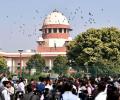
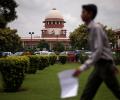
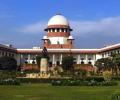
The Supreme Court of India will examine the jurisdiction of the Lokpal, India's anti-corruption ombudsman, in entertaining complaints against sitting high court judges. The court is considering a suo motu proceeding initiated over the Lokpal's January 27 order on the issue. The case involves two complaints filed against a sitting additional judge of a high court, alleging that he influenced a judge of the subordinate judiciary and a judge of the same high court set to deal with a suit filed against the complainant by a private company.
The Supreme Court of India has upheld a Bombay High Court order reinstating a woman as the sarpanch of a Maharashtra village, stating that bureaucrats cannot be allowed to "frustrate grassroot democracy." The court criticized instances of bureaucrats misbehaving with elected representatives and attempting to disqualify them by reopening old cases. The case involved Kalavati Rajendra Kokale, whose resignation from the sarpanch's post was withdrawn, but the Raigad district collector declared a vacancy and conducted a fresh election. The court found the collector's actions illegal and upheld Kokale's reinstatement, highlighting the importance of respecting the democratic process and elected representatives at the grassroots level.
The Supreme Court of India has directed the directors general of police (DGP) of all states and union territories (UTs) to strictly adhere to safeguards available to persons in custody. The court made these observations after a man alleged he was held by Haryana Police in violation of the law on arrest and subjected to physical abuse. The court emphasized that even a 'criminal' enjoys certain legal protections and that police officers must be held accountable for any transgressions. It further directed its registry to send a copy of its judgment to all DGPs as a reminder to adhere to these safeguards.
The Madras High Court has asserted that press freedom and privacy are intertwined and that surveillance constitutes an attack on the press, which is considered the fourth pillar of democracy. The court made this observation while addressing petitions filed by the Chennai Press Club and three reporters seeking protection from harassment by a police Special Investigation Team (SIT) probing the leak of an FIR concerning a sexual assault case at Anna University. The court highlighted the importance of protecting journalists' sources and criticized the SIT for seizing reporters' mobile phones without justification and for failing to adequately investigate the source of the leaked FIR.
The Delhi High Court has ruled that the rights of an overseas citizen of India (OCI) cardholder cannot be arbitrarily curtailed, stating that the deportation and blacklisting of a US citizen holding an OCI card, accused of unauthorized missionary activities, did not follow proper statutory procedure. The court emphasized the need for natural justice, requiring an opportunity for the individual to be heard and contest the allegations before any action is taken.
The Supreme Court of India has taken a strong stance against child trafficking rackets, canceling the bail granted to 13 accused and criticizing the Uttar Pradesh government for its inaction. The court expressed concern over the rising number of trafficking cases and the changing patterns of the crime. It also directed the state to ensure trafficked children are admitted to schools and receive support for their education.
The Information and Broadcasting Ministry is examining the existing statutory provisions and the need for a new legal framework to regulate 'harmful' content amid complaints of 'obscenity and violence' being shown on digital platforms.
'Buyers should be provided either a fixed possession date or a firm date for the start of construction.'
On the basis of her committee's report, the UCC in Uttarakhand established mandatory registration for marriages and live-in relationships, banned polygamy, and provided equal inheritance rights for women.
Christian Michel James, an alleged middleman in the AgustaWestland case, has claimed that attempts were made to poison him inside Tihar Jail. A Delhi court has sought a response from the prison authorities on his plea. The court has also directed that James be taken to AIIMS on April 7 for a check-up. James was extradited from Dubai in 2018 and has been in custody since then. He has been granted bail in the ED and CBI cases against him but has refused to accept bail citing security concerns. He has also alleged that he was subjected to an incident at AIIMS, the details of which he is willing to share with the court in private. The court has ordered James to furnish a personal bond and surety of Rs 10 lakh in both cases and surrender his passport. The CBI chargesheet claims an estimated loss of 398.21 million euros (about Rs 2,666 crore) to the exchequer due to the deal for the supply of VVIP choppers. The ED chargesheet filed against James alleged he received 30 million euros (about Rs 225 crore) from AgustaWestland.
India is set to bring eight cheetahs from Botswana in two phases, with four arriving by May 2025. This follows the successful reintroduction of cheetahs to Kuno National Park in Madhya Pradesh, with the population now at 26, including 14 cubs born in India. The initiative aims to boost cheetah conservation efforts and create inter-state collaboration for their protection. The project has already seen significant investment, with over Rs 112 crore spent on cheetah rehabilitation.
The Supreme Court of India has refused to interfere with a Madras High Court order quashing notices issued by the Tamil Nadu Pollution Control Board (TNPCB) against Isha Foundation, founded by Jaggi Vasudev. The notices were issued for alleged violation of environmental norms in the construction of a yoga and meditation center in Coimbatore. The court, however, emphasized that its order should not be seen as a precedent for regularizing illegal constructions and that Isha Foundation must comply with all environmental norms. The foundation had argued that its facilities fall under the education category, which exempts them from needing environmental clearance.
The Supreme Court of India has ruled that courts have the authority to determine the appropriate interest rate in cases involving share valuation, considering the specific facts of each case. The decision came in a 52-year-old legal battle between private parties and the Rajasthan government over the valuation of shares transferred to the state government. The court also modified the interest rate applicable to delayed payments, awarding 6 percent per annum simple interest from July 8, 1975, until the date of decree, and 9 percent per annum simple interest from the date of decree until realization of the payment.
'It is imprudent on the part of Indian insurance companies to invest out of the shareholders' fund in a private limited company.'
The bench gave liberty to Mukerjea to approach the trial court
India's anti-corruption ombudsman, the Lokpal, has dismissed a complaint alleging corruption against former Chief Justice of India (CJI) DY Chandrachud, citing a lack of jurisdiction. The complaint, filed in October 2024, alleged abuse of office, corruption, and favoritism by Chandrachud while he was CJI. The Lokpal, in its order, concluded that sitting judges of the Supreme Court, including the CJI, are not subject to its jurisdiction under the Lokpal and Lokayuktas Act. The Lokpal stated that the Supreme Court was established by the Constitution of India, not an Act of Parliament, making it outside the scope of its jurisdiction.
The Supreme Court of India has directed the tree authority of the Brihanmumbai Municipal Corporation to halt any further tree felling in Mumbai's Aarey colony without its permission. The order comes after the Mumbai Metro Rail Corporation Limited (MMRCL) informed the court that there were no pending proposals to cut more trees in the area. The court has previously permitted the felling of a limited number of trees for a metro rail project, but has also imposed penalties on the MMRCL for exceeding its permitted limits.
The Madras High Court has ruled that senior citizens can cancel gift or settlement deeds executed in favor of their children or close relatives if they fail to take care of them, even if it was not explicitly mentioned in the conditions imposed in the deeds. The court said the love and affection being the consideration, which can be traced out in the Settlement Deed, would be sufficient to hold that such love and affection was an implied condition that the senior citizen will be taken care of by the beneficiary of the Settlement Deed or gift deed.
The Supreme Court of India has formed a National Task Force (NTF) to address the growing concern of student suicides in higher educational institutions. The court took note of the recurring cases and directed Delhi Police to register FIRs on the complaints of families of two students who died by suicide at IIT Delhi in 2023. The NTF, chaired by former apex court judge Justice S Ravindra Bhat, will prepare a comprehensive report, including the identification of causes leading to suicides, analysis of existing regulations, and recommendations for strengthening protections. The NTF will also have the authority to conduct surprise inspections of higher educational institutions and make further recommendations to ensure a holistic approach to addressing mental health concerns and eliminating suicides.
The Uttar Pradesh government has informed the Supreme Court that the disputed "private well" near the Mughal-era Jama Masjid mosque in Sambhal was situated on public land. The state government said the petitioner failed to disclose there was a well within the boundary walls of the mosque known locally as "yagna koop". The committee, in a spot inspection, found that the well was situated outside the mosque boundary wall, the report said. The report said the state was committed to ensuring peace and harmony in the region and any restraint on the use of such public wells by the community at large may not help in achieving that goal.
Those arrested have been identified as Vipin Jain and Pomil Jain, former directors of Bhole Baba Dairy, Apoorva Chawda from Vaishnavi Dairy and Raju Rajasekharan from AR Dairy, they said.
The Supreme Court has postponed the hearing on a plea filed by a Bihar Police woman officer against a Patna High Court order that quashed the FIR against an IPS officer whom she accused of rape on the false promise of marriage. The court asked the woman's lawyer to make certain amendments to the petition before the next hearing in two weeks.
Tahawwur Hussain Rana, a key accused in the 26/11 Mumbai terror attacks, was brought to India on Thursday after being "successfully extradited " from the US, the National Investigation Agency (NIA) said. The 64-year-old Canadian citizen of Pakistani origin landed in Delhi in a special plane on Thursday evening, ending days of speculation of when and how he will be extradited, officials said. The NIA said in a statement that it had secured the successful extradition after years of sustained and concerted efforts to bring to justice the key conspirator behind the 2008 mayhem that claimed 166 lives. Rana is accused of conspiring with David Coleman Headley alias Daood Gilani, and operatives of designated terrorist organisations Lashkar-e-Taiba (LeT) and Harkat-ul-Jihadi Islami (HUJI) along with other Pakistan-based co-conspirators, to carry out the the three-day terror siege of India's financial capital.
Journalist and author Chitra Subramaniam has demanded that the Central Bureau of Investigation (CBI) make public its findings from the "box of evidence" received from Switzerland regarding the Bofors payoffs. Subramaniam, author of 'Boforsgate: A Journalist's Pursuit of Truth', expressed concerns about the lack of transparency surrounding the evidence, questioning who opened the box, when it was opened, and what it contained. She also raised doubts about the official narrative regarding the alleged bribe in the Bofors case, suggesting the sum of Rs 64 crore may not reflect the full extent of the corruption. Subramaniam also alleged that the CBI planted stories about Hindi film actor Amitabh Bachchan to derail the investigation and launched a political vendetta against the Bachchans. She recalled that Bachchan had come to her home and asked if she had seen his name. The CBI has recently requested assistance from the United States in the case, seeking information from private investigator Michael Hershman, who claims to have crucial details about the scandal. The Bofors scandal, a major bribery case involving the Indian government and the Swedish arms manufacturer Bofors in the 1980s, pertains to allegations of a Rs 64-crore bribe in a Rs 1,437-crore deal for the supply of 400 155mm field Howitzers.
The Supreme Court has announced it will decide in April whether to reconsider its 2022 verdict upholding the Enforcement Directorate's powers to arrest and attach property under the Prevention of Money Laundering Act (PMLA). The court is hearing a batch of pleas seeking a review of the July 2022 verdict, which upheld the ED's powers of arrest and attachment of property involved in money laundering, search and seizure under the PMLA. The verdict came on a batch of over 200 petitions filed by individuals and other entities questioning various provisions of the PMLA.
The Supreme Court of India has invalidated the appointment of 25,753 teachers and other staff in West Bengal's state-run and state-aided schools, deeming the selection process "vitiated and tainted." The court ordered the state government to conduct a fresh selection process within three months. The decision comes after a Calcutta High Court verdict in April 2024, which also annulled the appointments. The apex court, while upholding the high court's order, made some modifications, including exempting disabled employees from returning their salaries. The case stemmed from alleged irregularities in the 2016 recruitment process by the West Bengal School Service Commission (SSC), involving OMR sheet tampering and rank-jumping. The Supreme Court had previously termed it a "systemic fraud." Former West Bengal education minister Partha Chatterjee and Trinamool Congress MLAs Manik Bhattacharya and Jiban Krishna Saha are among the accused being investigated in the recruitment scam.
A five-judge bench of the Supreme Court will consider review pleas challenging the October 2023 verdict that declined legal sanction to same-sex marriage. The review pleas will be heard in chambers on January 9, with Justice P S Narasimha being the only member of the original bench that delivered the verdict.
A Delhi court sentenced former Congress MP Sajjan Kumar to life imprisonment for his role in the murder of two Sikhs during the 1984 anti-Sikh riots. The court cited Kumar's age and illness as mitigating factors in its decision to impose a lesser sentence than the death penalty. Kumar was convicted for being part of a mob that set fire to the victims' home and killed them. This is the second life imprisonment sentence for Kumar in connection with the 1984 riots. He is also facing other charges related to the riots.
In a relief to 4,000 families facing imminent threat of demolition of their houses in a bitterly cold winter, the Supreme Court on Thursday stayed the Uttarakhand high court order for removal of encroachments from 29 acres of land claimed by the railways in Haldwani, terming it a 'human issue' and saying 50,000 people cannot be uprooted overnight.
Vice President Jagdeep Dhankhar has questioned the Chief Justice of India's involvement in executive appointments, specifically citing the selection of the CBI director. He believes this practice undermines democratic principles and calls for revisiting the existing norms. Dhankhar also raised concerns about the "doctrine of basic structure", suggesting it has a debatable jurisprudential basis. He emphasized the importance of each institution operating within its constitutional boundaries and highlighted the need for coordinated autonomy. The vice president also discussed the need for a balanced approach to judicial review and the importance of judges focusing on judgments rather than other forms of expression. He stressed the need to revisit the current state of affairs to restore the judiciary's sublimity.
Four days after the top court cleared 10 bills, which were stalled and reserved by Tamil Nadu Governor R N Ravi for the president's consideration, and set a timeline for all governors to act on the bills passed by the state assemblies, the judgement running into 415 pages was uploaded on the apex court's website at 10.54 pm on Friday.
The "construct of the DPDP Act" cannot be changed at this stage, though there may be some minor tweaks in the language of the Rules and formats in certain legitimate cases.
RSS General Secretary Dattatreya Hosabale has criticized the Karnataka government's decision to provide four per cent reservation for Muslims in government contracts, stating that the Constitution does not allow religion-based quotas. He also said that such reservations go against the wishes of B R Ambedkar, the architect of the Indian Constitution. He also spoke about the controversy over Mughal emperor Aurangzeb's grave in Maharashtra, stating that people who went against the ethos of India were made icons. Hosabale lauded figures like Rajput king Maharana Pratap for resisting Mughal emperor Akbar and said those who resisted invaders were also "freedom fighters". He also spoke about the RSS's idea of 'One Nation, One Culture', stating that it draws inspiration from India's rich cultural heritage and ethos.
The Supreme Court of India has granted interim police protection to Discovery Communications India officials who have been receiving threats from followers of self-styled godman Asaram Bapu. The threats were triggered by the release of a documentary series titled "Cult of Fear: Asaram Bapu". The court has directed the Centre and several state governments to ensure the safety of the petitioners, including their offices.
The Supreme Court of India has dismissed a plea seeking directions to states to take immediate action against mob lynching and cow vigilantism, particularly against Muslims. The court stated that it was not feasible to "micro-manage" such incidents from Delhi and referred to its 2018 verdict, which issued guidelines to address mob violence and cow vigilantism. The court also noted that the new Bharatiya Nyaya Sanhita (BNS) criminalizes mob lynching as a separate offence. The plea argued that there was "gross non-compliance" with the 2018 directions, but the court maintained that authorities were bound by its previous rulings.
Over the medium and long term, the BJP hopes to devour the AIADMK, they having identified the party as 'ideologically not as sound as the DMK', predicts N Sathiya Moorthy.
'Many of them are mutilated beyond recognition. Every day an encounter takes place.' 'Bastar has been burnt to ash.'
'The government does not want to be transparent or accountable. Therefore, they do not want to appoint information commissioners.'